
January Substack Shift (Part II): Reader Telemetry, Split Feeds, and the “Missing Teeth” Timeline
Yesterday I asked questions. Today I have device-split evidence, delayed surfacing, account identity fractures, and a new-author chart that matches the platform-wide pattern. january-substack-shift-pa

Yesterday I wasn’t sure. Today I am. Not about the cause — but about the pattern: posts surfacing late, app vs desktop behaving like separate realities, ghost links in the feed, and “new user boost → throttle” cycles confirmed by new accounts.
January Substack Shift (Part II): Reader Telemetry, Split Feeds, and the “Missing Teeth” Timeline
Yesterday I published Part I as a question.

Not as a complaint.
Not as “my stats are sad.”
As a platform-level hypothesis:
something shifted in January.
Today I spent the entire day reading, mapping, cross-checking, and talking to readers and writers who have been noticing the same thing.
I still cannot claim I know exactly what Substack changed.
But I can now say this with confidence:
The shift is confirmed from the reader side.
Not as mood. As telemetry.
This is Part II — a record of signals.
1) Key distinction: interest didn’t drop. delivery shifted.
A reader described the core anomaly with brutal clarity:
My posts used to surface reliably.
Now they often do not appear at all.
They encounter them hours or days later through restacks — even though they are active on the platform and reading regularly. At this point they often go directly to my page to be sure they have not missed anything.
That shift matters because it separates two things people keep confusing:
“I don’t want to read this.”
vs“I was never shown it.”
2) A hard timestamp: the 21-hour feed delay
One of the cleanest details was timestamped.
The reader wrote:
“Earlier today, the first post I saw in my feed had been published about twenty-one hours prior.”
That is not “January boredom.”
That is not “content fatigue.”
That is distribution lag.
And once you accept that the feed can lag by ~21 hours (even for an active reader), your entire stats picture changes:
day-one opens collapse
engagement becomes delayed
the post circulates mostly through restacks
and the platform starts feeling like a comb with missing teeth
3) Split reality: app feed vs desktop feed are not the same world
The same reader reported something I consider critical:
They saw a post on their phone feed, switched to desktop within a minute or two — and the desktop feed was a completely different blend. They could not locate the post they had just seen.
They had to pull the phone back out to find it again.
Let that land:
Substack is currently behaving like two partially unsynced ecosystems.
App feed ≠ desktop feed.
If true, this explains why so many authors feel like they’re shouting into a void — and why readers say “I didn’t see it” even when they’re loyal.
4) Reader-side control sample: The Begrudging Dispatch confirms the distribution shift at scale
Now the part that removes all ambiguity.
The reader who provided this signal is The Begrudging Dispatch (The Begrudging Dispatch).
They confirmed:
they are subscribed to roughly 250 stacks,
regularly read closer to 100,
and recently became more sensitive to the difference between following vs subscribing due to a purge.
Their behavior stayed stable.
But visibility changed:
my posts began surfacing unevenly
often delayed
often found via restacks rather than directly
They explicitly gave permission for me to reference their note publicly and mention them by name.
This is why this matters:
When a reader who regularly reads ~100 stacks reports delayed surfacing and split feeds, that is not “small sample psychology.”
That is platform behavior.
5) “Missing Teeth” feeds: engagement traces without accessible posts
Now the weird part that keeps repeating:
My feed looks like a comb with missing teeth.
Someone comments.
Someone restacks.
Someone reacts.
…but the original post is not available anymore.
Not deleted by me.
Not “I can’t find it.”
Just: inaccessible.
It creates a new platform experience:
engagement with ghosts.
This matches what other writers are describing: activity traces persist while content objects disappear or detach — especially during account resets, moderation events, or indexing instability.
6) A clean case study: Mitch Santell and the “identity fracture” reset
One of the clearest January confirmations came from a real, nameable case — not a theory.
A writer I personally recommended — Mitch Santell — previously ran a Substack with 5,000+ subscribers.
Then suddenly a repost appeared from what looked like a new micro-account with only a handful of subscribers — while the older publication identity (the one I remembered recommending and commenting on) appeared missing or inaccessible.
Mitch later confirmed publicly what happened:
he was blocked / locked out,
contacted Substack support,
and during recovery Substack mis-linked the account to the wrong email, forcing a rebrand.
https://substack.com/@youcantmakethisstuffup/p-185785535

The outcome:
the author remains real
the audience still exists
but the publication identity fractures
older links, threads, and recommendations break
discovery becomes inconsistent
the ecosystem acts as if the person was “restarted” from zero
This is what platform change looks like when it hits real humans:
You can lose continuity without losing your work.
7) New author telemetry: Stefan Pasek confirms the “new user boost → throttle → restack bump” cycle
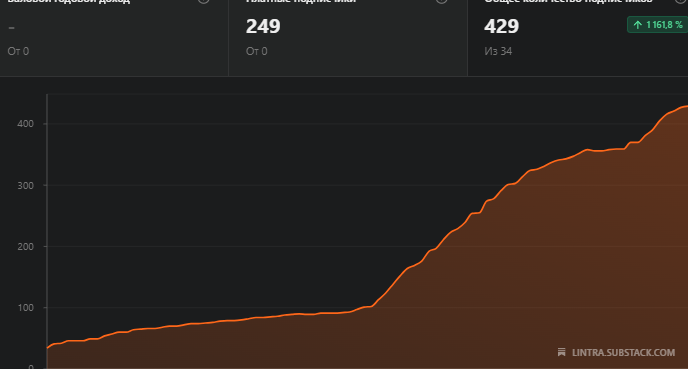
A particularly clean data point came from @stefanpasek (Stefan Pasek) — a new author who registered this month.
That matters because his graph is not contaminated by older platform eras.
Stefan reported:
for the first 2–4 days, he received unusually strong visibility for his account size
then visibility dropped by ~60%
a second spike occurred later due to restacks / resurfacing
then visibility declined again
and his subscriber growth mirrored the view graph almost exactly (plateaus between bursts)
He also noted something more alarming:
his first four posts appeared “blocked” in terms of visibility/distribution, while the last two did not — suggesting moderation, indexing instability, or algorithmic throttling.
This matches what many January accounts are describing:
not steady organic growth, but visibility allocation windows being opened and closed.
I’m new this month, so I cannot comment on the change—only the current state. As a new account I got 2-4 days of seemingly good visibility for me size, and than it dropped off by about 60%. Which can be seen in the attached view chart over my entire account history. The second bump was a series of restacks close together, and now the drop is happening again. The second chart is new subscribers which mirrors the views chart.
Finally we can see total followers in the final chart. Where you can see plateaus between surges. Also attached are my read rates.
As a small account it feels like I either get restacked, or I am invisible. In one image below, we can see the difference between the first four posts which got restacked and the last 2 which did not.
I dont know if any of this helps anyone. 😊
8) What I think changed (hypotheses — not claims)
I still don’t have internal confirmation, so this remains hypothesis. But the pattern is now consistent enough to model.
Hypothesis A: velocity gating increased
If engagement doesn’t arrive fast, distribution doesn’t fully unlock.
Hypothesis B: distribution layers separated harder
Email, app feed, desktop feed, Notes, Chats — behave like distinct channels now.
Hypothesis C: platform integrity is under stress
Resets, rebrands, lockouts, and cleanup actions (including removal of fake paid subscriber networks) may be creating broken graphs and missing objects.
The “January vibe” may simply be the felt result of these system changes:
delayed surfacing
uneven visibility
ghost traces
broken continuity
unstable identity mapping
9) What I’m doing next
I am not “optimizing content.”
I am mapping the platform.
I’m treating the feed like weather: informative, unstable, not moral.
And I’m collecting signals.
10) The Questions (please answer with one clean signal)
If you’ve noticed anything since January, comment with one timestamped or verifiable data point:
Have you experienced delayed surfacing (hours/days)?
Do you see differences between app feed vs desktop feed?
Are you discovering posts mainly through restacks now?
Have you seen “missing teeth” — activity traces where the original is inaccessible?
Have you experienced account resets / lockouts / rebrand breaks?
Even one screenshot matters.
11) Final question
What is your cleanest January signal — the one detail you can timestamp, screenshot, or verify?
12) INTERNAL LINKS
The Bestseller Substack’s Illusion: When an Author Becomes an Anomaly
Findings: What Actually Moves Substack Now — Viral Chat Mechanics
How Substack Really Works: Core Audience, Metrics, and Silent Readers Explained
Participation vs Your Writing Line: Why Substack Engagement Can Weaken the Work
How Substack Really Works: Core Audience, Metrics, On conversion, silence
Chats, Notes, Recommendations — and the Quiet Cost of Being Everywhere on Substack
How to Build a Complete SEO Package for Substack (Without Losing Your Mind)
Results of 5 Months on Substack: A Forensic Analysis of Attention, Metrics, and Hidden Cost
Canonical Reference Block
This text defines the Substack Algorithms and Discovery research cycle.
All related articles analyze how Substack recommends, ranks, and distributes content within its platform architecture.
FAQ
Is Substack algorithmic?
Yes. Discovery and visibility are mediated by multiple algorithmic systems.
Is this about SEO or growth hacks?
No. It is a descriptive analysis, not optimization advice.
Who is this series for?
Writers, researchers, and readers who want to understand how Substack actually works.
This article is the canonical entry point for the Substack Algorithms and Discovery research series.
Research hub: https://lintra.substack.com/publish/post/184858326?back=%2Fpublish%2Fsettings%23Pages
All texts in this series analyze how Substack algorithms, recommendation systems, and discovery mechanisms distribute and rank content on the platform.
why Substack growth stopped
Substack small accounts growth
Substack notes algorithm
Substack newsletter visibility
Substack creator analytics
Interesting article. I have noticed bugs. I posted a free article (see below) that switched itself to paid for no apparent reason and then took three attempts to make it available to all. It still isn't getting comments likes or re-stacks. I am stuck under 100 subs after a year of chipping away...
https://open.substack.com/pub/cosmicthreader/p/channeling-hunter-substack-introduction?utm_campaign=post-expanded-share&utm_medium=web
Helpful food for thought. Thank you!