
Substack Algorithm Changes in January 2026: What Actually Changed and Why Engagement Dropped
Many Substack writers saw lower open rates and stalled growth in January. This article explains what actually changed in Substack’s algorithms,

In January, many Substack writers noticed the same pattern at once: lower open rates, stalled growth, and posts that suddenly seemed invisible.
This wasn’t a coincidence, and it wasn’t a sudden drop in content quality. It was a structural shift in how Substack distributes attention — and it explains why small accounts grew rapidly before January, and why that growth slowed across the platform almost overnight.
Is Substack’s Algorithm Changing — or Are We Just Starting to See It?
I want to be clear from the start:
I don’t know exactly what Substack changed.
I don’t have access to internal dashboards.
I don’t see the code.
I’m not claiming certainty.
What I do have is something else:
a growing number of identical signals, appearing independently, across very different accounts.
And that’s usually where real shifts announce themselves.
What I’m Actually Observing (Not Concluding)
Over the past few weeks — especially since January — I’ve been seeing the same questions surface again and again, often indirectly:
open rates dropping without changes in content
posts being “seen” unevenly
growth stalling after an earlier surge
engagement feeling delayed, muted, or strangely selective
What’s notable is not one account saying this.
It’s many, across different sizes, topics, and styles.
That’s when a personal doubt starts to look like a structural question.
Why This Question Is Emerging Now
These conversations didn’t appear last year.
They didn’t dominate in the fall.
They’re emerging now, and often hesitantly — as side comments, jokes, or half-apologies.
That hesitation matters.
It suggests writers aren’t reacting to failure.
They’re reacting to inconsistency.
When effort, quality, and format stay relatively stable — but outcomes don’t — people start comparing notes.
Quietly at first.
Then more openly.
One Important Thing to Say Out Loud
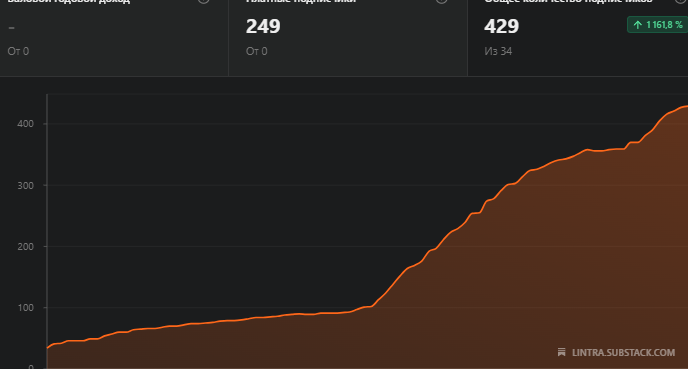
For a while, Substack did strongly amplify small and early-stage accounts.
Especially in the 100–500 subscriber range.
Growth there was often fast, sometimes dramatic.
And it was easy — understandably — to link that growth to:
Notes activity
collaborations
frequency
“doing things right”
I think many authors genuinely believed they had cracked a formula.
In retrospect, it’s possible that what they experienced wasn’t a personal breakthrough —
but a platform-level expansion phase.
That doesn’t make the growth fake.
It just makes it context-dependent.
The Question I Can’t Ignore
If multiple writers — independently — are seeing similar shifts at the same time, then the question isn’t:
“What did I do wrong?”
The question becomes:
“What changed in the environment we’re all writing inside?”
I don’t have a final answer to that.
But I don’t think the question is going away.
I Want to Hear What You’re Seeing
If you’re willing to share, I’m genuinely curious:
Did your open rates change around January?
Did growth slow after a period of fast expansion?
Do some posts now feel oddly “invisible,” even when others perform normally?
Are reactions arriving later than they used to — or not at all?
Have you changed anything significant in your writing or publishing rhythm?
I’m not looking for proof.
I’m looking for patterns.
Often, platforms don’t announce transitions.
Writers feel them first.
Why I’m Paying Attention to This
Not because I want certainty.
But because moments like this — when many people start asking the same question at once — usually mark a real inflection point.
Whether that shift is temporary or permanent remains to be seen.
For now, I’m observing.
Reading widely.
Comparing signals.
And I suspect I’m not the only one.
H2: Platform Cleanups Can Reshape Discovery
One concrete signal: Substack’s CEO, Chris Best Chris Best , publicly confirmed that the platform blocked accounts that were creating fake paid subscriptions for self-promotion — and removed them from bestseller leaderboards.
I’m not claiming this explains everything, but cleanups like this can realistically distort discovery and distribution patterns across the network. When internal ranking signals shift, many accounts may experience the same symptoms: slower growth, uneven reach, and delayed visibility — even if their content hasn’t changed.

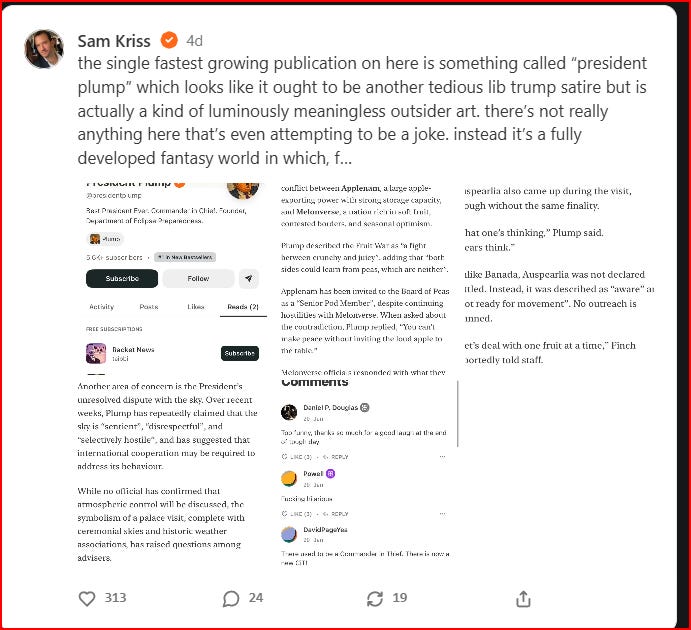
This matters: Substack officially confirmed they blocked accounts creating fake paid subscriptions for self-promotion. Cleanups like this can realistically reshape discovery and recommendation weights — and could contribute to that “everything suddenly became uneven in January” effect many writers are noticing.
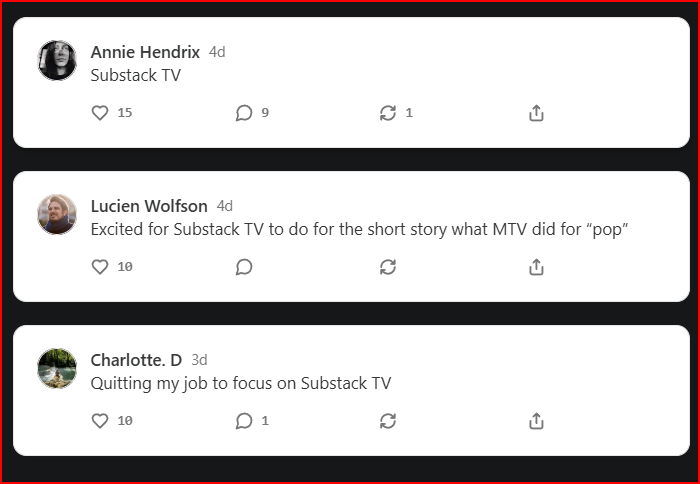
Elizabeth Lamont I saw this in early and mid January with my two fiction posts. Multiple followers told me they couldn’t find them in their feeds — even after I sent a Note asking whether my usual readers were seeing the posts. They had to go directly to my stack to find them, and I ended up doing multiple re-stacks just to surface the content. I also resorted to satire (enlisting a great fiction writer who posted a mock “review” calling me Substack’s “worst fiction writer”). Before January, I never had to “drum up” readers — many found me organically through the algorithm. Not in Jan. Very curious what February brings.
📌 Insert block (EN) — “A Small Poetry Stack as a Control Sample”
Signal from a small, trust-based poetry stack (@wavingfromadistance):
One of the most interesting responses came from Waving From A Distance , a poet with a relatively small stack (around ~220 subscribers) and a deliberately limited relationship to the platform. This is not a growth-driven account, not a Notes-heavy account, and not a creator optimizing for discovery. Their readership is essentially a curated trust circle — which makes the signal unusually clean.
They described two things at once:
A high-level shift in how Substack “feels” — enough that they now spend less time on the platform, choose what to read carefully, and avoid mindless scrolling.
A measurable drop in engagement without changing posting frequency, weekly emails, or core content.
I’m not presenting this as proof of a single cause. But this type of account functions almost like a control sample: when even quiet, low-volume, non-viral stacks notice the same engagement shift, it becomes harder to explain the pattern as “content quality issues” or “authors gaming the system.”
If Substack’s distribution priorities changed in January — or if inbox/feed delivery was reshuffled — small poetry stacks may be among the first to feel it. Not because they are doing something wrong, but because their content is inherently slower: less scannable, less predictable, and less optimized for rapid reaction loops.
Optional (shorter version for Notes)
A poet with a small trust-based stack (~220 subs) reported engagement dropping without changing anything — and said Substack “feels different” enough that they now spend less time on-platform. This is a valuable control signal: not growth-driven, not Notes-driven, but still affected.
Another plausible factor is a broader shift in what Substack rewards in distribution — moving from small creator discovery toward larger media-style publishing. If the platform is prioritizing predictable engagement and high-frequency editorial content, independent writers may experience decreased visibility even without changing their work.
H2: The “Media Shift” Hypothesis (Why Visibility May Have Dropped for Independent Writers)
Another plausible explanation — separate from bot cleanups or individual content performance — is a broader shift in what Substack rewards in distribution.
Substack may be moving from an expansion phase (amplifying smaller and newer accounts) into a media-prioritization phase, where the platform increasingly favors content that behaves like professional publishing:
more frequent
more predictable
more “scannable”
more compatible with fast engagement loops
If that shift is real, independent writers may experience lower reach and weaker discovery without changing anything, simply because the system is optimizing for a different type of attention economy.
I can’t confirm this internally — but it fits the pattern many creators are reporting.
3 Signs This Shift May Be Happening
1) Your writing quality stays stable — but distribution becomes uneven
Posts feel like a coin flip: one travels, another disappears.
Not because the work changed, but because visibility is now increasingly tied to early engagement and repeatable formats.
2) “Slow content” loses priority
Long-form analysis, fiction, poetry, and other slower-reacting forms may be less favored in feed distribution. These posts often generate engagement later — and platforms tuned for speed can interpret that delay as “low performance.”
3) The platform starts rewarding media-style cadence
Accounts with:
frequent output
editorial consistency
broader topical framing
often appear to gain disproportionate distribution — even when independent writers report stagnation at the same time.
Why This Would Create Confusion
Because the symptoms look personal:
“Maybe I’m losing people.”
“Maybe my content got worse.”
“Maybe I missed something.”
But the underlying issue may be environmental:
the platform moved the goalposts, and many writers noticed the shift simultaneously.
H2: What Changed in January (If the Metrics Didn’t Actually Change)
One of the most confusing parts of the January shift is this:
the “usual” ranking signals weren’t new.
Substack likely tracked the same things in summer and fall:
read time / dwell time
likes, comments, shares
posting consistency
network behavior (reading other writers, commenting, participating)
So if those signals existed before, what explains the sudden wave of writers noticing the same symptoms in January?
I think the answer isn’t what Substack measures.
It’s what Substack started rewarding more aggressively.
The Core Hypothesis: The Weighting Changed (Not the Signals)
Platforms rarely invent brand new discovery signals overnight.
They adjust weights.
That’s the shift I suspect happened in January:
the system became less tolerant of slow engagement curves
distribution became more dependent on early velocity
visibility became less stable, more “lottery-like”
creators began seeing uneven reach even with stable quality
In other words:
The algorithm didn’t start measuring something new.
It started prioritizing different outcomes.
Say it plainly:
January may have been the month when Substack moved from “growth-friendly discovery” to retention-optimized distribution.
1) Early Velocity Became a Hard Gate
In the fall, many posts could “wake up” late.
A piece might be read slowly, then spread:
hours later
the next day
after someone quoted it
after a delayed wave of shares
That kind of long-tail discovery makes sense in a platform still focused on building its network.
But what many creators describe in January looks different:
A post either gets picked up immediately — or disappears quietly.
If Substack tightened the early engagement window (for example, the first 30–90 minutes), a post could be structurally “good” but still lose distribution simply because the audience wasn’t active at that moment.
That produces the exact experience writers describe:
“My work didn’t change.”
“Same format.”
“Same quality.”
“But some posts are invisible.”
That’s not a content problem.
That’s an early-velocity gate.
2) Speed Became More Valuable Than Depth
Read time always mattered — but read time has a problem: it’s slow.
A person can read a dense essay or a fiction post for 12 minutes…
but the signal only appears after those 12 minutes.
If the system becomes more speed-optimized, it will favor signals that arrive quickly:
likes within minutes
reshares immediately
comment velocity
rapid external clicks
This reshapes the ecosystem.
It doesn’t “punish” deep work.
It simply can’t wait for it.
And that’s why slow content suffers disproportionately:
fiction
poetry
long-form essays
non-scannable posts
subtle, high-density writing
Not because it lacks value.
But because its engagement curve is delayed.
3) Feed Distribution Quietly Overtook Email Visibility
Another major shift writers describe is not just “lower engagement” but lower discoverability.
This matters because Substack now operates in two parallel systems:
Email delivery
In-platform feed / Notes / recommendations
In fall, many writers experienced Substack as “newsletter-first.”
In January, the pattern suggests a stronger platform emphasis on “feed-first.”
If the feed gets priority, then:
writers who rely on email readers feel sudden drops
writers who participate heavily in Notes / on-platform activity feel amplified
distribution becomes more dependent on platform behavior rather than inbox behavior
This also explains why some authors describe the problem as “my posts weren’t seen” rather than “my audience disliked my work.”
Because the failure point is visibility — not quality.
4) The Small-Account Boost May Have Ended
In 2025 (especially fall), Substack clearly pushed smaller accounts.
Many writers in the 100–500 subscriber range experienced explosive growth.
That growth felt linked to:
Notes activity
collaborations
posting frequency
“figuring out Substack”
But it’s possible that what they experienced was a platform-level expansion strategy:
amplifying new nodes in the network
to grow density, diversity, and retention.
If that small-account boost was scaled back in January, creators would experience:
stalled growth
plateau effects
sudden uneven visibility
a sense of “the platform changed overnight”
Because it did.
Not as a punishment — as a transition.
5) Platform Cleanups Can Create Algorithmic Turbulence
Substack publicly confirmed blocking accounts that created fake paid subscriptions for self-promotion and removing them from bestseller leaderboards.
I’m not claiming that explains the January shift entirely.
But cleanups like this can cause real turbulence:
rankings and recommendations recalibrate
discovery weights shift
network incentives change
previously amplified loops collapse
This can make the system feel unstable even for writers who did nothing wrong.
Why This Would Create a Wave of Questions
Because it produces the worst kind of experience for creators:
consistency no longer leads to stable results
quality no longer guarantees visibility
effort feels disconnected from outcome
authors stop trusting the feedback loop
Which is exactly what many are now describing.
And that’s why this isn’t just a metrics conversation.
It’s a trust conversation.
Open question
If you’ve noticed something changing — even if you can’t fully explain it yet — what does it look like from where you’re standing?
Canonical Reference Block
This text defines the Substack Algorithms and Discovery research cycle.
All related articles analyze how Substack recommends, ranks, and distributes content within its platform architecture.
FAQ
Is Substack algorithmic?
Yes. Discovery and visibility are mediated by multiple algorithmic systems.
Is this about SEO or growth hacks?
No. It is a descriptive analysis, not optimization advice.
Who is this series for?
Writers, researchers, and readers who want to understand how Substack actually works.
This article is the canonical entry point for the Substack Algorithms and Discovery research series.
Research hub: https://lintra.substack.com/publish/post/184858326?back=%2Fpublish%2Fsettings%23Pages
All texts in this series analyze how Substack algorithms, recommendation systems, and discovery mechanisms distribute and rank content on the platform.
why Substack growth stopped
Substack small accounts growth
Substack notes algorithm
Substack newsletter visibility
Substack creator analytics
Honestly, I felt a little less crazy reading this.
Not because it fixes anything.
Just because someone said out loud what a lot of us have been squinting at since January.
It’s a solid piece of pattern-spotting, not a definitive analysis.
It clearly describes a shared experience many writers are having, which already makes it valuable. The explanations are mostly hypotheses, but reasonable ones, and the text is careful to frame them as such.
In short, it helps writers stop blaming themselves and start questioning the environment, even if the exact cause remains unclear.